
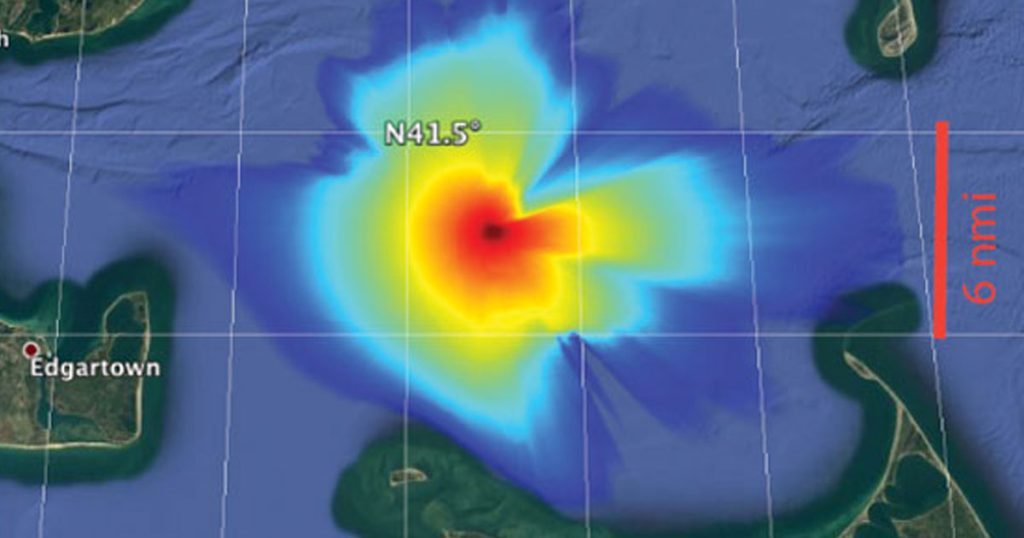
Environmental compliance documents are prepared by BOEM for US offshore renewable energy projects, and underwater acoustic modeling is an integral element of these documents to understand potential acoustic impact on marine life. Acoustic modeling is conducted by different contractors, using a variety of models and approaches, which results in diverse estimations of predicted sound fields, thus, making it difficult to understand to what degree predictions are within acceptable norms.
Ultimately, this study will recommend a consistent underwater acoustic modeling approach and quantify the acoustic impact volume associated with the construction of renewable energy facilities. These results will assist BOEM with unifying, understanding, and validating the range of acoustic modeling results used for compliance documents through determination of the salient environmental parameters that influence predicted acoustic fields and, hence, mitigation needs. Understanding the limits and strengths of the acoustic modeling approaches will increase understanding and lead to harmonization of approaches as well as facilitate a reduction in inconsistency.
