
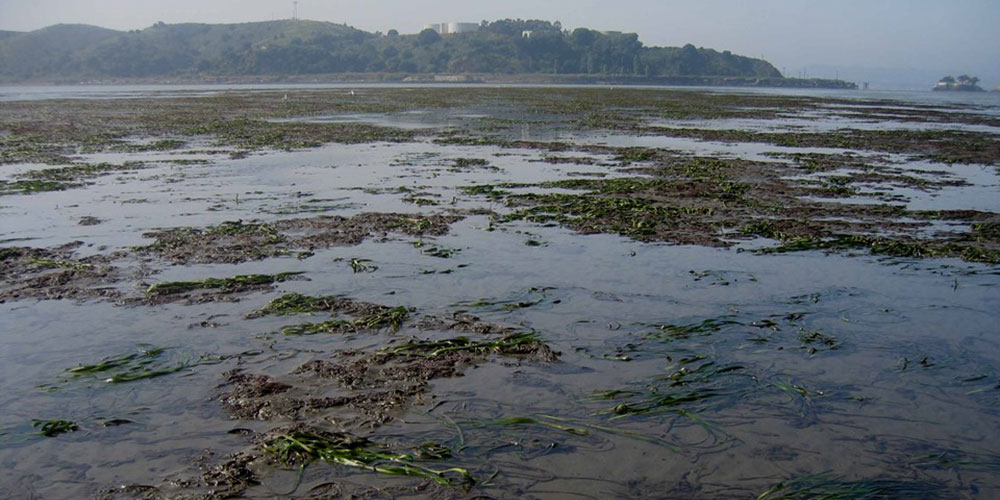
Since the MC-252 oil spill in the Gulf of Mexico, there has been renewed interest regarding the impact of oil on ecosystem health. This paper summarizes existing literature on seagrass response to oiling, including both field and laboratory studies, which revealed inconsistent responses of seagrasses to oil exposure. Dr. Fonseca and his collaborators added a case study to examine the potential oiling impacts to eelgrass (Zostera marina) from the 2007 Cosco Busan event in San Francisco Bay. Neither long-term integrators of seagrass response (seagrass shoot densities and percent elongation of rhizome internodes) or a short-term indicator (seagrass photosynthetic efficiency) had consistent relationships to local shoreline cleanup assessment team (SCAT) oiling categories. It was concluded that seagrasses lag behind other coastal ecosystems in our understanding of their tolerance to oiling and dispersants and that conclusive studies examining the influence of degree and duration of oil exposure on seagrasses remain lacking.
For more information on this article or regarding our habitat mitigation services, please contact Dr. Mark Fonseca (772-219-3065).
Online Article Citation: Fonseca, M., G.A. Piniak, and N.Cosentino-Manning. 2016. Susceptibility of seagrass to oil spills: A case study with eelgrass, Zostera marina in San Francisco Bay, USA. Marine Pollution Bulletin. http://dx.doi.org/10.1016/j.marpolbul.2016.11.029.
