
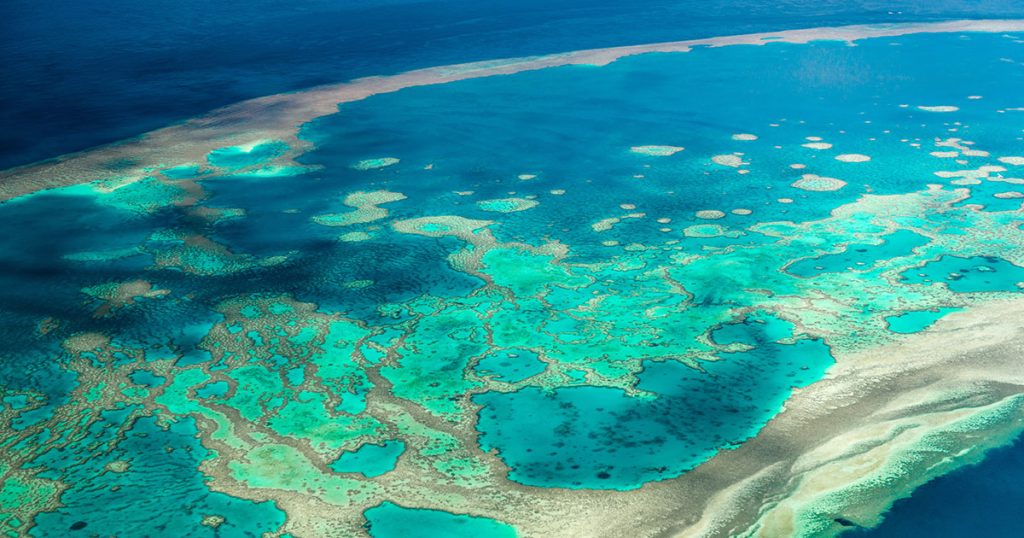
To mark CSA Ocean Sciences Inc. (CSA) becoming part of APEM Group, we are celebrating one of the world’s most remarkable ecosystems: Australia’s Great Barrier Reef (GBR). The GBR extends along the northeastern coast of Queensland, where APEM has an established presence in Brisbane.
The world’s largest coral reef system, the GBR stretches for more than 1,400 miles and comprises thousands of individual reefs and islands. Its vast mosaic of approximately 3,000 reefs and more than 1,000 islands and cays forms one of the richest and most complex natural ecosystems on Earth. Recognizing its outstanding universal value, the United Nations Educational, Scientific and Cultural Organization (UNESCO) designated the GBR a World Heritage Area in 1981. It is also one of the Seven Natural Wonders of the world.
The GBR is home to more than 600 hard and soft corals and more than 1,500 fish species. Beyond its extraordinary biodiversity, the Reef supports tourism and fisheries, provides essential nursery habitat for fish and invertebrates, and helps protect the Queensland coast from waves and storms. It is also Sea Country for Aboriginal and Torres Strait Islander Traditional Owners, whose cultural connections to the region extend back thousands of years.
Coral reefs are among the ecosystems in which CSA has the deepest experience. CSA scientists have worked in coral environments around the world–from the Atlantic waters off our Florida headquarters and the Gulf of America to the Mediterranean, the Pacific, the Gulf Cooperation Council region, and beyond.
This work spans coral reef assessment, monitoring, and mitigation. CSA scientists document coral distribution, diversity, and condition; monitor changes over time; remove invasive species; and relocate corals when impacts cannot otherwise be avoided. These projects combine detailed scientific understanding with practical field experience to help clients plan and undertake activities responsibly in sensitive marine environments.
Across the regions where CSA works, coral reefs face mounting and often interconnected pressures. Rising ocean temperatures are particularly consequential. When corals are exposed to excessive heat, they may expel the photosynthetic algae (commonly called zooxanthellae) that give them much of their color and energy, a stress response known as coral bleaching. Bleached corals are not necessarily dead and may recover if conditions improve, but prolonged or repeated heat stress can weaken them, increase their susceptibility to disease, and ultimately cause mortality.
The GBR has experienced increasingly frequent and extensive bleaching. During the 2023–2024 austral summer, aerial surveys of more than 1,000 reefs found evidence of bleaching on 73% of the surveyed reefs within the Marine Park. Although the severity varied considerably among locations, the event was considered one of the most extensive recorded during nearly four decades of monitoring.
The GBR contends with outbreaks of crown-of-thorns starfish, a voracious coral predator. Similar cumulative pressures occur in other reef systems in which CSA has worked and observed coral bleaching, disease, or competition from invasive organisms, and other natural and human-induced impacts. Understanding how these stressors interact is essential to designing effective monitoring, mitigation, and management programs.
Given the GBR’s ecological, cultural, and economic importance, research, conservation, and management occur year-round. Scientists, Traditional Owners, reef managers, government agencies, industries, and communities work at different scales – from studying individual species and reef sites to monitoring conditions across the entire ecosystem.
This breadth of work reflects the scale of the challenge: protecting the GBR requires detailed local knowledge, long-term monitoring, effective environmental management, and the ability to translate complex scientific information into practical decisions.
“Now that CSA has officially joined APEM Group, we look forward to bringing CSA’s coral reef expertise here to Australia,” says Tara Kennedy, Director – Clients and Markets for APEM Group in Australia. “Our teams work extensively across the GBR catchments, delivering environmental approvals, ecological expertise, and heritage services. Combining this local experience with CSA’s global experience in coral reef monitoring and management means we are well placed to support projects in the region while helping protect the values that make the GBR globally significant.”
Together, APEM and CSA offer clients a powerful combination of Australian environmental knowledge and international marine science capability. By connecting expertise across disciplines, geographies, and project stages, our teams can provide the informed, practical support needed to work responsibly in and around the world’s most sensitive and valuable marine environments.
