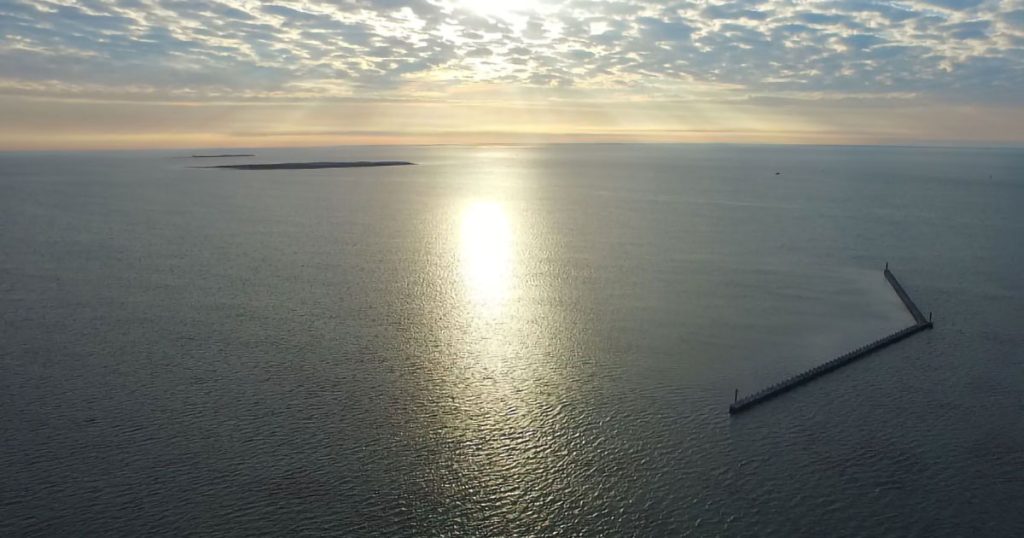
CSA is conducting mitigation of seagrass by creating a living shoreline reef which is expected to reduce wave energy in an environment containing patchy seagrass beds. A reduction in wave activity on this site should enable natural coalescence of patchy seagrass beds to form more continuous, persistent seagrass habitat. Using wave forecasting techniques, CSA’s team designed a 500 ft living shoreline reef consisting of layered units of stacked concrete with natural rock embedded in it and ensured the design met all federal and state agency requirements. Construction of the living shoreline reef was completed in January 2017 and it is expected to reduce wave energy and increase seagrass acreage over time. “The reef was laid out in an inverted V-Shape design that reduces the energy in the shadow, allowing submerged aquatic vegetation acreage to increase” as quoted by Kathy Herring, environmental program supervisor at the North Carolina DOT Natural Environment Section. The design will benefit the ecosystem from improved water quality, more aquatic habitat and reduce sediment erosion. A sediment digital elevation model (DEM) to document the elevation across the entire site was created by using our state of the art unmanned survey vessel (USV) to track sediment accumulation
CSA will conduct monitoring of the site to evaluate changes in seagrass cover, epifaunal recruitment on the reef, wave energy, and sediment elevations for 5 years post-construction.
This project is part of our Ports & Other Coastal Infrastructure market as well as our Marine Operations service.
To read the full article published in the Outerbanks Voice as published on January 24th, 2017
https://outerbanksvoice.com/2017/01/24/bridge-work-brings-beneficial-reef-projects-to-outer-banks/
