
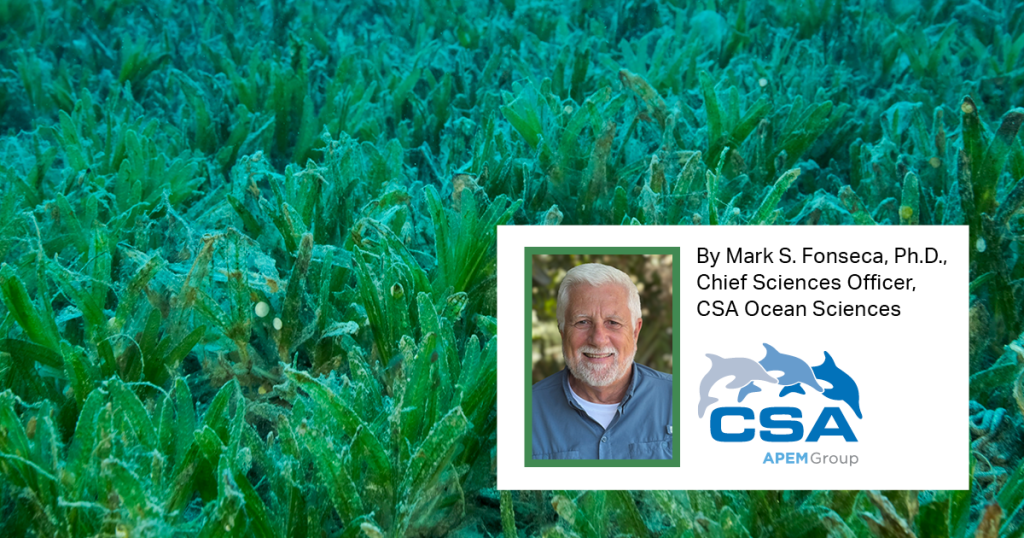
The appearance of Halophila stipulacea in Florida in 2024 has prompted calls for rapid detection, eradication, and containment—consistent with conventional invasive species management, which holds that introduced species reduce ecosystem integrity and should be removed whenever feasible. However, the history of marine biological invasions suggests that management objectives often evolve as species become established, spread beyond containment, and begin functioning as components of altered ecosystems.
Identifying an Invader
The recent discovery of a well-established H. stipulacea stand near Tequesta, Florida— approximately 85 miles north of, and only two years after, the original Key Biscayne occurrence—suggests the species may already have progressed beyond the earliest stages of invasion, and could have undergone a cryptic expansion phase like that seen in Grenada, Dominica, St. Lucia, and Martinique. If additional populations turn up elsewhere along Florida’s coastlines, managers may find that eradication is no longer achievable and containment unlikely, especially if recruitment from the Caribbean is persistent, as suspected. This would parallel other marine invasions in which management interventions shifted from eradication to monitoring, impact assessment, and adaptive control (e.g., as seen with lionfish populations).
H. stipulacea should not be viewed as merely as another introduced species. It may represent a basin-scale invasion capable of affecting all of Florida’s dominant seagrass: Thalassia testudinum, Syringodium filiforme, Halodule wrightii, and native Halophila species. Its broad environmental tolerance, rapid vegetative expansion, and wide depth range suggest it could become a new foundational species across the tropical western Atlantic.
The ecological risks are real. Caribbean studies document rapid expansion, extensive monospecific meadows, and displacement of native seagrasses, particularly Syringodium filiforme; surveys in Dominica and Martinique recorded active expansion into native habitat and shifts in benthic community composition. But ecological function and ecological composition are not synonymous. A central question in invasion ecology is whether management should prioritize restoring historical species assemblages or maintaining altered ecosystem processes under changing conditions—a question that applies mainly to containable introductions, not to Florida’s situation, where an endless source population sits just tens of kilometers south with the potential to arrive en masse during extreme events (i.e., hurricanes).
Weighing the Differences
Unlike Florida’s native Halophila species, H. stipulacea forms exceptionally dense rhizome networks that likely stabilize sediment, comparable to native Halodule wrightii stands, and presumably similarly resistant to erosion and storm disturbance. Like other seagrasses, H. stipulacea likely provides many familiar ecosystem functions: sediment stabilization, carbon storage, nutrient cycling, habitat for fish, and invertebrates, improved water quality, and rapid colonization of disturbed sediments. In areas where native seagrass has already been degraded by poor water quality, dredging, disease, and more, should H. stipulacea’s presence automatically be treated as a net ecological loss? These services remain qualified (“likely”) because comprehensive assessment of services has only just begun.
The answer may not be straightforward. Florida has lost substantial seagrass acreage in recent decades, including major declines in the Indian River Lagoon, Biscayne Bay, and Florida Bay, where native recovery may not be feasible even with restoration efforts. If H. stipulacea becomes irrevocably established in a degraded location, how should it be valued?
Manatee use of the species may be among the strongest arguments for a functional ecosystem perspective: if H. stipulacea can support manatee grazing alongside fish habitat, sediment stabilization, and carbon sequestration where native seagrasses are failing, managers may eventually need to weigh ecosystem function against potentially futile attempts at strict preservation of historical species composition. At present, evidence that it is an equal substitute for native forage is scant—but if it proves capable of sustaining seafloor coverage, sediment stability, carbon storage (as it surely will), and manatee forage where native species cannot recover, it may functionally replace services that would otherwise be lost.
Functional substitution may also matter under climate change scenarios. Because H. stipulacea evolved in the Red Sea and western Indian Ocean under warmer, more variable conditions, it may be more resilient to rising temperatures than Florida’s native seagrass—potentially a climate-resilient successor rather than simply a competitor.
An interesting comparison is Zostera japonica, introduced to the Pacific Coast of North America via Japanese oyster imports in the early twentieth century and first collected in Washington State in 1957. Initially regarded purely as a threat to native eelgrass (Zostera marina), it was later found to alter sediment characteristics, increase faunal richness and functions as a habitat-forming ecosystem engineer much like Z. marina itself. Management in Washington and Oregon evolved toward weighing ecological services alongside native-biodiversity impacts, though California retained a more precautionary stance—demonstrating that an introduced seagrass can both benefits and concerns simultaneously.
Management Considerations
A critical difference remains: Z. japonica primarily colonized sparsely vegetated upper intertidal habitat outside Z. marina’s range, so it rarely competed directly with existing seagrass. H. stipulacea, by contrast, frequently invades habitat already occupied by native seagrasses, and its low canopy—just a few centimeters tall, versus up to a meter for Florida’s larger species—could shift faunal use significantly. Still, this does rule out valuable ecosystem services in altered or degraded environments, and it may call for scenario-dependent assessment of trade-offs.
Given the history of H. stipulacea’s inexorable spread both in the Caribbean and Mediterranean, Florida’s long-term challenge may not be deciding whether the species is “good” or “bad,” but whether management should focus on preserving historical ecosystem composition at all costs, or on maintaining ecosystem function and resilience under conditions increasingly different from those in which Florida’s seagrass communities evolved.
As the species expands statewide, managers should expect a difficult but scientifically legitimate question: is a dense H. stipulacea meadow preferable to a healthy native seagrass meadow? In most of Florida’s robust seagrass ecosystems, almost certainly not. But in degraded systems, it might be preferable to bare sediment, chronic turbidity, recurring algal blooms, and the loss of services once provided by historical seagrass communities. In such locations, the answer may be yes, simply because no functional alternative exists.
The future management of H. stipulacea in Florida may therefore become less a question of invasive species eradication, and more a question of how society chooses to manage emerging novel ecosystems in an era of multiply impacted estuaries and environmental change.
For an exclusive full-length version of this editorial feature, which includes bonus material and further reading suggestions, visit eco’s website here.
This feature appeared in environment coastal & offshore (eco) magazine’s 2026 issue III. Read in the magazine here.
